

Table of Contents
Introduction — Can You Really Teach English Online With No Experience?
If you’ve been searching “teach English online with no experience,” you’re probably wondering one thing:
Is this actually possible — or is it just another internet promise?
The honest answer is: yes, it’s possible — but not in the way many websites make it sound.
You don’t need years of teaching experience.
You don’t need to be a professional teacher.
And in some cases, you don’t even need a degree.
But you do need to understand what “no experience” really means, which companies are beginner-friendly, and what’s realistically expected from you in 2025.
That’s where most people get confused — and where many articles fail.
Some sites promise high pay with no effort.
Others hide important requirements until the end.
And many list companies that quietly reject beginners.
This guide is different.
In this article, you’ll get a clear, honest explanation of:
- who can teach English online with no experience
- what requirements actually matter
- which companies truly hire beginners
- how much beginners really earn
- and the safest way to get started step by step
Whether you’re a student, changing careers, staying home with kids, or just curious about teaching online, this guide will help you decide if this path is right for you — before you waste time or money.
Let’s start with the most important question.
Quick Answer — Can You Teach English Online With No Experience?
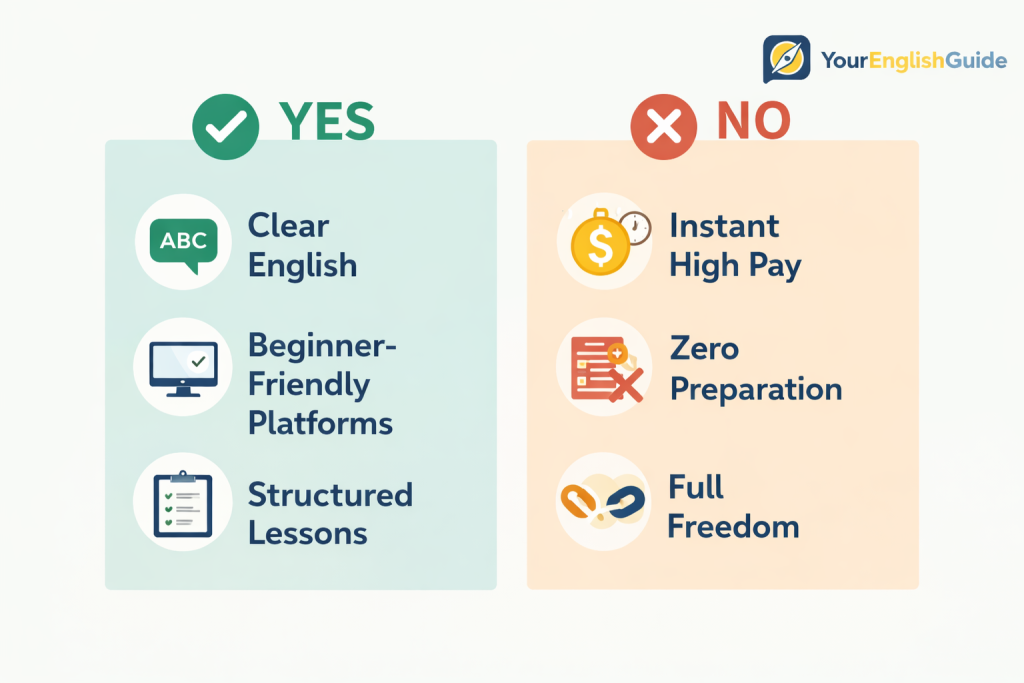
Yes — you can teach English online with no experience, but not everyone qualifies, and not every company will hire you.
Here’s the honest version most websites don’t tell you.
The Short Answer
✔ Yes, it’s possible if:
- you speak clear, fluent English
- you’re comfortable talking to students
- you can follow lesson plans
- you’re willing to start at entry-level pay
❌ No, it’s not realistic if:
- you expect high pay immediately
- you want complete freedom with no structure
- you’re not willing to prepare or train at all
Why Companies Hire Teachers With No Experience
Many online English platforms don’t need professional teachers.
They need people who can:
- speak clearly and confidently
- follow scripts or lesson slides
- be patient and friendly
- show up on time
- communicate well with students
That’s why teaching experience is often optional, especially for beginner-friendly platforms.
The Most Important Reality Check
Teaching English online with no experience usually means:
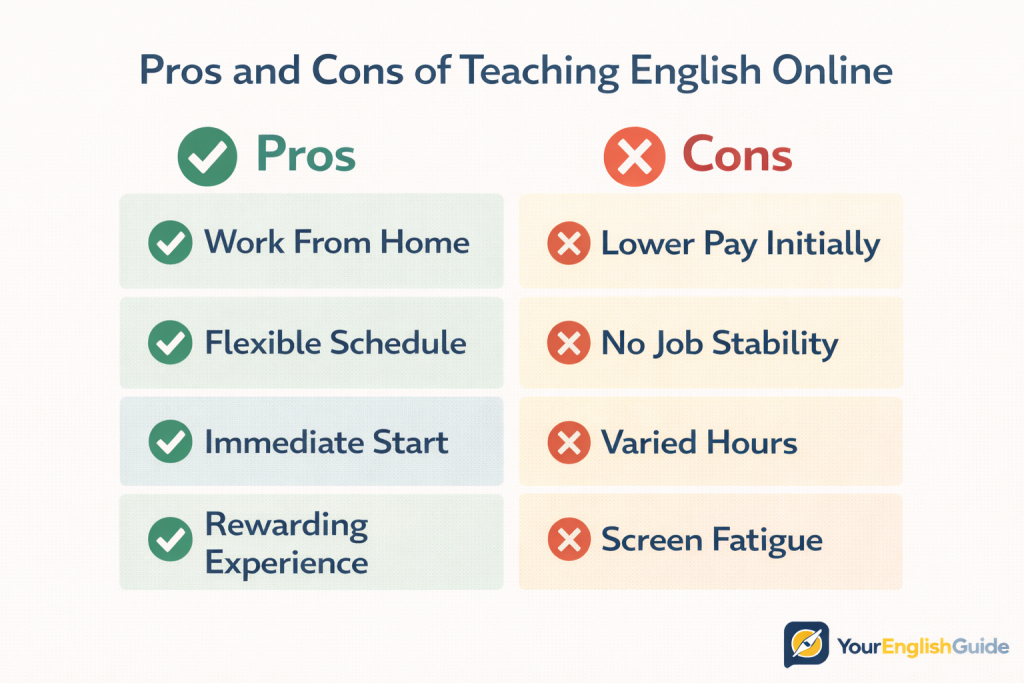
- lower pay at the beginning
- structured lessons (not creative freedom)
- close performance monitoring
- gradual improvement over time
This is normal — and temporary.
Many teachers start with zero experience, build confidence, then move to better-paying platforms later.
Who This Path Is Best For
This option works best if you:
- want a flexible, remote job
- are comfortable speaking English for long periods
- can follow instructions
- are realistic about beginner pay
- want to gain experience step by step
Who Should Think Twice
You may want to reconsider if you:
- need full-time income immediately
- dislike structured or scripted lessons
- don’t want feedback or evaluation
- expect fast promotions
This guide will help you decide honestly — before you apply anywhere.
What “No Experience” Really Means (Important)
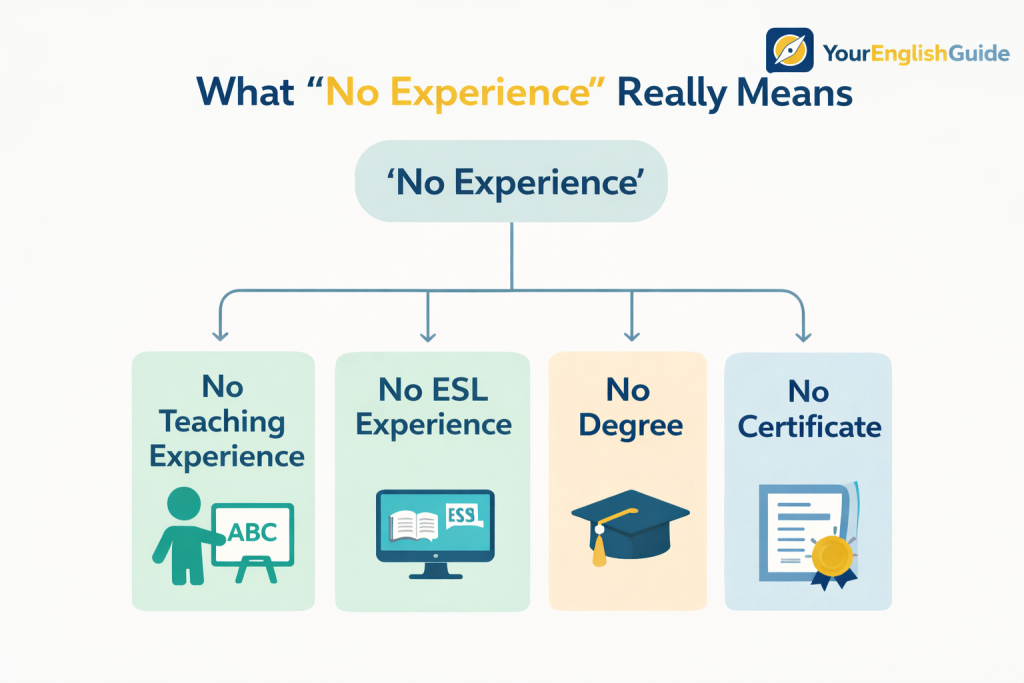
When companies say “no experience required,” they don’t all mean the same thing.
This is where most beginners get confused — and where many articles are misleading.
Let’s break it down properly.
No Teaching Experience vs No ESL Experience
These two are often confused, but they are not the same.
No teaching experience means:
- you’ve never taught before
- no classroom background
- no formal training
No ESL experience means:
- you’ve taught something before
- but not English
- or not English to non-native speakers
👉 Most beginner-friendly platforms are okay with both — as long as you can communicate clearly and follow lessons.
Online Teaching vs Classroom Teaching
Many companies do not count classroom teaching as necessary experience.
Why?
Online teaching often:
- uses prepared slides or scripts
- focuses on conversation
- requires energy, clarity, and patience
- values communication over theory
That’s why people with:
- customer service experience
- tutoring experience
- public speaking experience
often succeed — even with no teaching background.
No Degree vs No Certificate vs No Experience
This is where things really matter.
These are three separate requirements, but many websites mix them together.
- No experience → often acceptable
- No certificate → sometimes acceptable
- No degree → depends heavily on the company
Some platforms allow:
- no experience + no certificate
Others allow: - no experience + certificate required
Very few allow:
- no experience + no certificate + no degree
We’ll explain this clearly in the next sections so you don’t waste time applying to the wrong places.
Can Complete Beginners Really Get Hired?
Yes — complete beginners do get hired, but not instantly and not everywhere.
What companies usually want instead of experience:
- clear spoken English
- reliable internet
- a quiet teaching space
- confidence on camera
- willingness to learn
That’s why interviews and demo lessons matter more than resumes for beginners.
Key Takeaway
“No experience” doesn’t mean “no expectations.”
It means:
- no teaching background is okay
- but communication, preparation, and reliability still matter
Understanding this will save you time, frustration, and rejection.
Can You Teach English Online With No Degree?
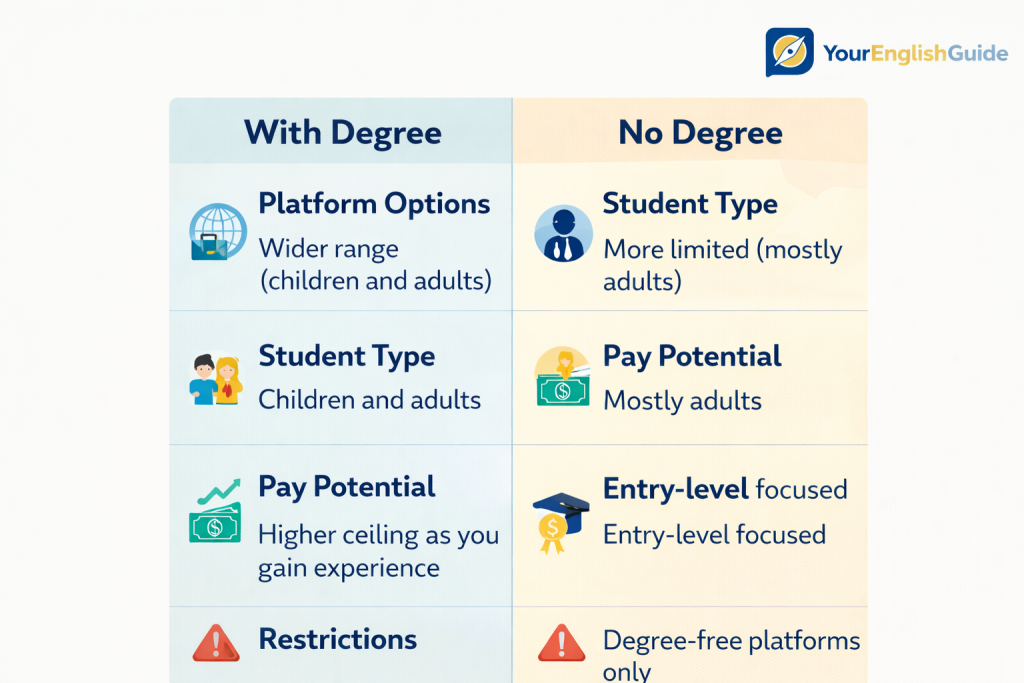
This is one of the most common — and most misunderstood — questions.
The honest answer is: sometimes yes, sometimes no.
It depends entirely on which companies you apply to and who their students are.
Companies That Require a Degree
Many larger or more formal platforms require a bachelor’s degree.
This is usually because:
- of government regulations
- school partnerships
- visa or accreditation rules
- parent expectations
These companies often serve:
- school-aged children
- formal education programs
- countries with strict requirements
If you don’t have a degree, applying to these companies usually leads to automatic rejection, even if you speak perfect English.
Companies That Don’t Require a Degree
Some online English platforms do not require a degree, especially those focused on:
- conversational English
- adult learners
- informal tutoring
- practice-based speaking
These platforms usually care more about:
- your communication skills
- how you perform in an interview
- your confidence on camera
- your reliability
However, there are trade-offs:
- lower starting pay
- fewer guaranteed hours
- more competition
This is often where beginners without experience start safely.
Is a Degree More Important Than Experience?
In many cases — yes.
Some companies prefer:
- no experience + a degree
over - experience + no degree
This isn’t about teaching ability — it’s about company rules.
That’s why it’s important to:
- read requirements carefully
- apply only where you qualify
- avoid wasting time
What to Do If You Don’t Have a Degree
If you don’t have a degree, your best strategy is to:
- focus on beginner-friendly platforms
- strengthen your interview performance
- consider a basic TEFL certificate
- gain online teaching experience first
Many teachers start without a degree, build experience, and later move to better opportunities.
Key Takeaway
You can teach English online without a degree — but your options are more limited.
Choosing the right platforms is far more important than applying everywhere.
Do You Need a TEFL Certificate With No Experience?
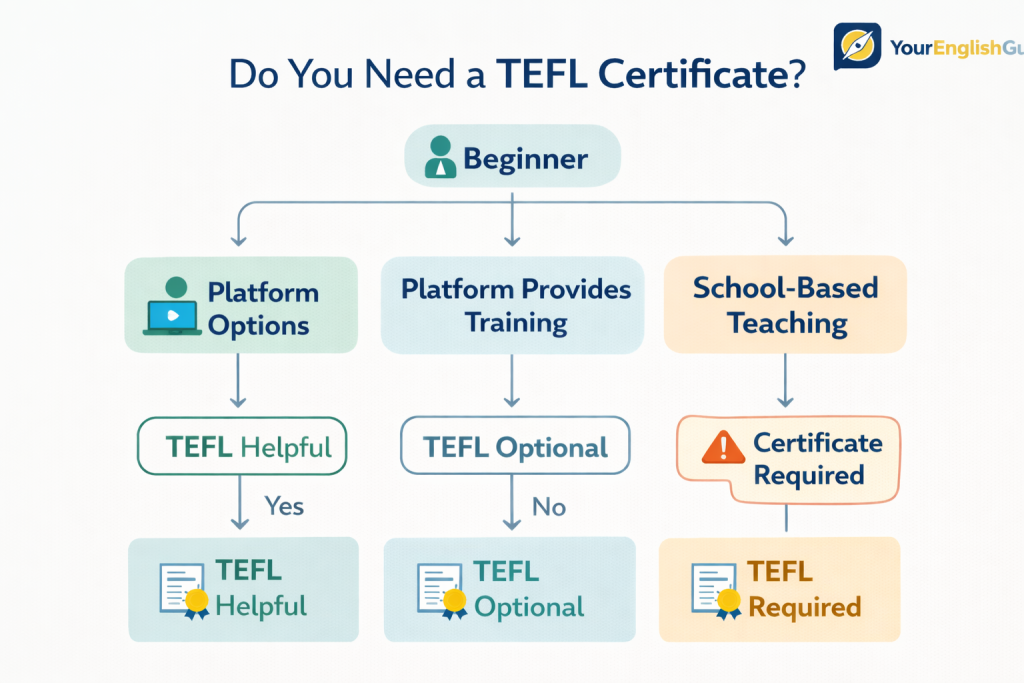
A TEFL certificate is not always required, but for beginners with no experience, it can make a big difference.
The key is knowing when it’s necessary, when it’s optional, and when it’s a waste of money.
When a TEFL Certificate Is Required
Some companies will not hire you without a TEFL (or similar certificate), even if they accept beginners.
This usually happens when:
- the platform works with schools
- the company operates in regulated markets
- the company needs proof of basic teaching knowledge
In these cases, a TEFL certificate is a checkbox requirement, not proof that you’re an expert teacher.
When a TEFL Certificate Is Optional (But Helpful)
For many beginner-friendly platforms, a TEFL certificate is not mandatory — but it helps.
It can:
- improve your chances of getting hired
- make interviews and demo lessons easier
- give you basic teaching structure
- increase confidence for first-time teachers
For beginners with no experience, a TEFL often replaces experience in the eyes of employers.
H3: When a TEFL Certificate Is NOT Necessary
A TEFL certificate may not be needed if:
- the platform provides full training
- lessons are fully scripted
- you are teaching conversation only
- the company focuses on practice, not instruction
In these cases, paying for an expensive certificate is often unnecessary.
Best Beginner-Friendly TEFL Options (What Actually Works)
If you choose to get a TEFL, keep it simple.
What companies usually want:
- 120-hour TEFL
- online is acceptable
- certificate of completion
What you do not need:
- expensive “advanced” packages
- lifetime subscriptions
- job placement promises
Many beginners successfully start with basic, affordable TEFL courses.
Key Takeaway
You don’t always need a TEFL certificate to teach English online with no experience — but having one can open more doors and reduce rejection.
The goal is qualification, not perfection.
Best Companies That Hire Teachers With No Experience
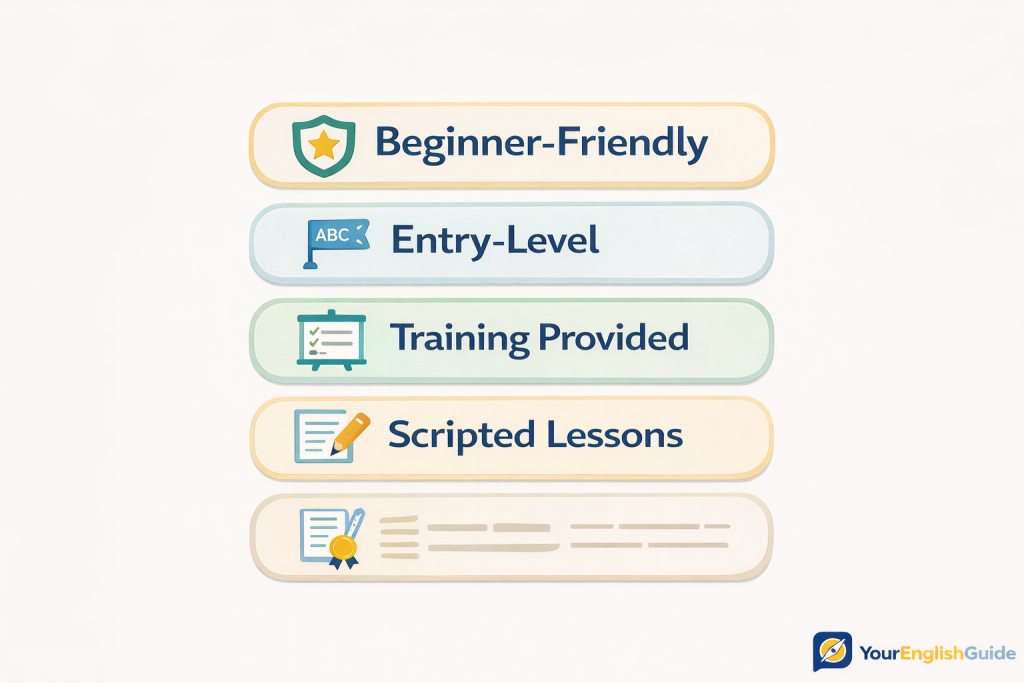
Not all online English teaching companies are beginner-friendly — even if they claim “no experience required.”
This section explains which types of platforms actually hire beginners, which ones quietly reject them, and how to avoid wasting time.
1. Beginner-Friendly Platforms (True Entry-Level)
These platforms are the best place to start if you have no teaching experience.
What Makes These Platforms Beginner-Friendly
True entry-level platforms usually offer:
- structured or scripted lessons
- training or onboarding support
- clear teaching guidelines
- flexible schedules
- simple lesson goals (conversation, pronunciation, practice)
They focus less on your résumé and more on:
- how you speak
- how you interact with students
- how you perform in a demo lesson
This is why beginners often succeed here.
What These Platforms Expect From Beginners
Even without experience, you’re still expected to:
- speak clear, fluent English
- follow lesson plans exactly
- be punctual and reliable
- use basic teaching tools (camera, headset, slides)
- accept feedback and improve
Most beginners are monitored closely at first, which is normal.
Typical Beginner Pay (Realistic)
Beginner-friendly platforms usually offer:
- lower starting pay than experienced platforms
- pay per lesson or per hour
- limited guaranteed hours at first
This is not a failure — it’s the entry point.
Many teachers use these platforms to:
- gain confidence
- build teaching experience
- move to higher-paying options later
2. Platforms That Say “No Experience” (But Expect More)
Some companies advertise “no experience required” — but still reject most beginners.
Why These Platforms Reject Beginners
Common hidden expectations include:
- strong demo lesson performance
- natural teaching presence
- classroom-style explanations
- fast thinking and improvisation
- prior tutoring or coaching experience
These platforms often serve:
- advanced learners
- exam preparation students
- professional adults
They may not be lying — but they are not ideal starting points.
When You Should Apply to These Platforms
These platforms are better suited if you:
- already taught online elsewhere
- feel confident leading lessons
- can explain grammar clearly
- are comfortable being evaluated
Many teachers apply to these after 3–6 months of beginner teaching.
Key Takeaway
If you have no experience, start with true entry-level platforms, even if the pay is lower.
Experience comes first.
Better pay comes later.
How Much Can You Earn Teaching English Online With No Experience?
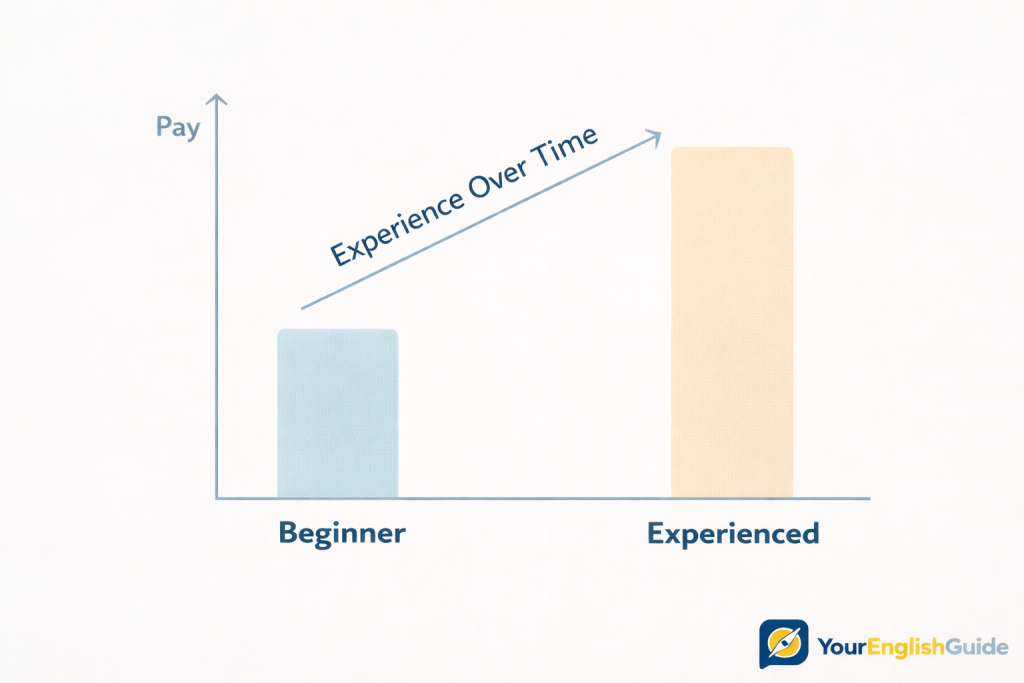
Income is where many articles become misleading — so let’s be clear and realistic.
If you’re teaching English online with no experience, your earnings will usually start lower, then increase as you gain confidence and results.
Realistic Beginner Pay (Honest Numbers)
Most beginners can expect:
- Low entry-level pay at first
- Payment per lesson or per hour
- Fewer guaranteed hours in the beginning
Typical beginner ranges:
- Conversation-based platforms → low starting rates
- Structured lesson platforms → slightly more stable pay
- Adult conversation platforms → pay varies by availability
This is normal and not a sign you’re doing something wrong.
Beginner pay reflects:
- training time
- performance monitoring
- limited experience
Why Beginner Pay Is Lower
Companies take a risk when hiring beginners.
They often:
- invest in training
- provide lesson materials
- monitor performance closely
- replace teachers who don’t meet standards
Lower starting pay helps them manage that risk.
The upside?
👉 You gain real teaching experience quickly.
How Pay Increases Over Time
Most teachers increase earnings by:
- improving demo lesson performance
- maintaining good student feedback
- increasing availability
- moving to better-paying platforms
- teaching more advanced students
Many teachers use beginner platforms as a stepping stone, not a final destination.
Common Income Myths to Ignore
❌ “Earn high hourly rates with no experience”
❌ “Work anytime with unlimited students”
❌ “Make full-time income immediately”
These claims are unrealistic and often tied to affiliate hype.
What Beginners Should Aim For Instead
A realistic beginner goal is:
- gaining experience
- becoming confident on camera
- understanding online teaching tools
- building consistency
Once you have experience, options expand quickly.
Key Takeaway
Teaching English online with no experience can generate income, but it works best as:
- a flexible side income at first
- a learning opportunity
- a stepping stone to better roles
Patience pays off here.
Step-by-Step: How to Start Teaching English Online With No Experience
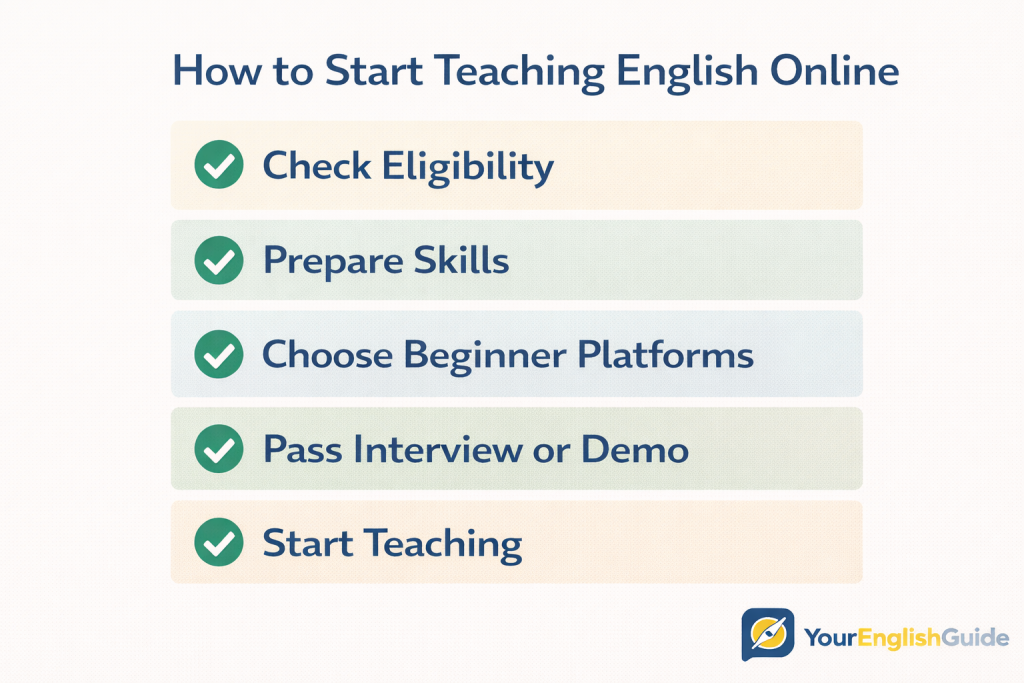
If you’re starting from zero, the biggest mistake is doing things in the wrong order.
Follow these steps exactly, and you’ll avoid most beginner rejections and frustrations.
Step 1 — Check Your Basic Eligibility
Before applying anywhere, make sure you have the basics:
- clear, fluent spoken English
- a quiet place to teach
- a reliable internet connection
- a working laptop or desktop
- a webcam and headset
You don’t need a fancy setup — but you do need to be clear and professional on camera.
Step 2 — Prepare Basic Teaching Skills (Very Important)
You don’t need to be a teacher — but you do need to know how to:
- speak slowly and clearly
- explain simple ideas
- follow lesson slides or scripts
- encourage students
- stay calm if something goes wrong
Practice by:
- explaining simple topics out loud
- watching beginner teacher demos
- rehearsing introductions and greetings
This alone improves interview success dramatically.
Step 3 — Choose Beginner-Friendly Platforms First
Do not apply everywhere at once.
Start with:
- platforms that provide training
- scripted or semi-scripted lessons
- beginner-level students
Applying to advanced platforms too early often leads to rejection and lost confidence.
Step 4 — Pass the Interview or Demo Lesson
Most companies focus on:
- communication style
- confidence on camera
- ability to follow instructions
- friendliness and patience
Common beginner mistakes:
- speaking too fast
- over-explaining grammar
- trying to “sound like a teacher”
- freezing when something unexpected happens
Keep it simple. Calm and clear beats perfect.
Step 5 — Get Your First Students
Your first lessons are about:
- learning the platform
- getting comfortable
- receiving feedback
Expect:
- nervousness
- small mistakes
- improvement with every lesson
This phase is normal — and temporary.
Key Takeaway
Teaching English online with no experience is not about being perfect.
It’s about:
- preparation
- consistency
- willingness to improve
Follow the steps, and experience comes quickly.
Common Mistakes Beginners Make (And How to Avoid Them)
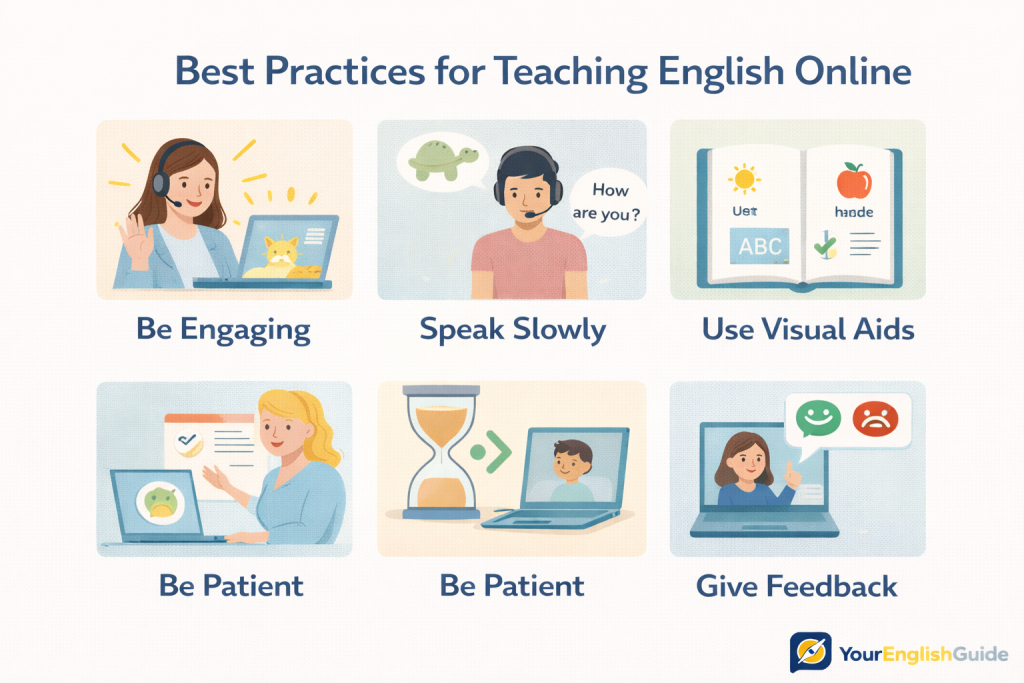
Most people who fail at teaching English online don’t fail because they lack ability — they fail because they make avoidable beginner mistakes.
Knowing these in advance gives you a huge advantage.
Applying to the Wrong Companies First
Many beginners apply to:
- advanced platforms
- high-paying companies
- schools that expect experience
This often leads to:
- quick rejection
- lost confidence
- wasted time
What to do instead:
Start with beginner-friendly platforms, even if the pay is lower. Experience comes first.
Ignoring Teaching Preparation
Some beginners think:
“I speak English, so I’ll be fine.”
But speaking English and teaching English online are different skills.
Common issues:
- speaking too fast
- over-explaining
- freezing during demos
Fix:
Practice explaining simple ideas out loud and rehearse basic lesson flow before interviews.
Overpaying for Certificates
Many beginners buy:
- expensive TEFL bundles
- lifetime subscriptions
- “guaranteed job” packages
Most companies only need:
- a basic 120-hour TEFL
- proof of completion
Fix:
Avoid upsells. Simple certification is enough for beginners.
Expecting Full-Time Income Immediately
Teaching English online with no experience is usually:
- part-time at first
- inconsistent in the beginning
- performance-based
Expecting full-time income right away leads to frustration.
Fix:
Treat your first months as a learning and experience-building phase.
Falling for Scams or Unrealistic Promises
Warning signs include:
- “Guaranteed placement”
- “High pay with no effort”
- Requests for upfront fees to access students
Fix:
Apply only to reputable platforms, never pay to get students, and research companies carefully.
Giving Up Too Early
Many beginners quit after:
- one rejection
- a bad demo lesson
- a slow first month
This is normal — not failure.
Fix:
Adjust, practice, and reapply. Confidence grows quickly with repetition.
Key Takeaway
Avoiding beginner mistakes saves you:
- time
- money
- stress
Teaching English online is a skill you grow into, not something you master on day one.
Can Non-Native English Speakers Teach English Online With No Experience?
This is one of the most sensitive topics in online English teaching — and many articles either avoid it or give false hope.
Here’s the honest answer.
The Reality of Native vs Non-Native Hiring
Some online English platforms do prefer native speakers, mainly because:
- parents expect a “native accent”
- marketing focuses on nationality
- company policies are outdated
However, this does not mean non-native speakers cannot teach English online.
It means the options are more limited — and more specific.
What Matters More Than Your Passport
For non-native English speakers, companies usually care more about:
- clear, understandable pronunciation
- strong grammar accuracy
- confidence speaking on camera
- ability to explain English simply
- reliability and professionalism
Many non-native teachers are hired because they:
- speak very clear English
- understand learner challenges
- explain concepts better than natives
Accent clarity matters more than accent type.
Best Options for Non-Native Teachers With No Experience
Non-native beginners usually do best with platforms that focus on:
- adult learners
- conversational English
- tutoring or language exchange
- community-based platforms
These platforms often:
- evaluate skills, not nationality
- care more about communication
- allow teachers from many countries
Pay may be lower at first, but experience builds quickly.
Honest Limitations to Understand
It’s important to be realistic.
As a non-native beginner:
- fewer companies are available
- competition may be higher
- accent bias can exist
- rejection happens more often
This is frustrating — but it’s not personal.
Many successful non-native teachers start with:
- beginner platforms
- part-time hours
- steady improvement
Then move to better opportunities over time.
Key Takeaway
Yes, non-native English speakers can teach English online with no experience — but success depends on:
- clarity, not nationality
- preparation, not perfection
- choosing the right platforms
Understanding the limits helps you plan smarter and avoid disappointment.
FAQs — Teach English Online With No Experience
Can I really teach English online with no experience?
Yes. Many online English platforms hire teachers with no prior teaching experience, especially for conversation-based or beginner-level classes. However, you still need clear English, basic preparation, and realistic expectations.
Do I need a degree to teach English online?
Not always. Some companies require a bachelor’s degree, while others do not. If you don’t have a degree, you’ll need to apply only to degree-free platforms, which usually focus on adult conversation or tutoring.
Do I need a TEFL certificate if I have no experience?
Sometimes. A TEFL certificate is not always required, but it can improve your chances of getting hired and make interviews easier. Many beginner teachers use a basic 120-hour TEFL to replace experience.
How fast can I start teaching English online?
If you already meet the basic requirements, some beginners start within 2–6 weeks. This includes preparing, applying, interviewing, and completing onboarding or training.
How much can beginners realistically earn?
Most beginners earn entry-level pay at first. Income usually increases as you gain experience, receive good feedback, and move to better-paying platforms. Teaching English online with no experience works best as a side income initially.
Is teaching English online legit or a scam?
Teaching English online is legitimate, but scams do exist. Avoid companies that:
- ask for upfront fees to access students
- promise guaranteed income
- advertise unrealistically high pay with no requirements
Reputable platforms pay you — you never pay them.
Can students or stay-at-home parents teach English online?
Yes. Many students and stay-at-home parents teach English online because of the flexible schedule. Just make sure you can commit to regular hours and have a quiet space to teach.
What’s the biggest reason beginners get rejected?
The most common reasons are:
- poor demo lesson performance
- speaking too fast or unclearly
- lack of preparation
- applying to platforms that expect experience
Rejection is common at first and doesn’t mean you’re not capable.
Final Verdict — Is Teaching English Online With No Experience Worth It?
Teaching English online with no experience can be worth it — but only if you approach it with realistic expectations and the right strategy.
It’s not a shortcut to instant income.
It’s not effortless.
And it’s not for everyone.
But for the right person, it can be a flexible, low-risk way to earn online, gain experience, and open doors to better opportunities over time.
Who This Is a Good Option For
Teaching English online with no experience is a good fit if you:
- speak clear, fluent English
- are comfortable talking to people online
- want flexible, remote work
- are okay starting with entry-level pay
- are willing to learn and improve
- want to build experience step by step
Many successful online teachers started exactly this way — with no background, no classroom experience, and plenty of questions.
Who Should Avoid It
This path may not be right for you if you:
- need full-time income immediately
- dislike structured or scripted work
- are uncomfortable being on camera
- don’t want feedback or evaluations
- expect high pay with no preparation
Being honest with yourself here will save you frustration later.
The Best Way to Start Safely
If you’re serious about teaching English online with no experience, the safest approach is:
- Understand the real requirements
- Prepare basic teaching skills
- Start with beginner-friendly platforms
- Accept entry-level pay as temporary
- Build experience and confidence
- Move up when you’re ready
This is how most long-term teachers succeed.
Final Advice
Don’t rush.
Don’t overspend on certificates.
Don’t apply everywhere at once.
Focus on:
- preparation
- consistency
- realistic expectations
Experience comes faster than you think when you take the process seriously.
CTA — Start With Beginner-Friendly Platforms
If you want to move forward, your next step is simple:
👉 Start by applying only to beginner-friendly platforms that truly accept teachers with no experience.
👉 Prepare for interviews and demo lessons.
👉 Treat your first months as a learning phase.
Teaching English online isn’t a scam — but success belongs to those who approach it carefully and honestly.